
The Riddims That Changed The Sound
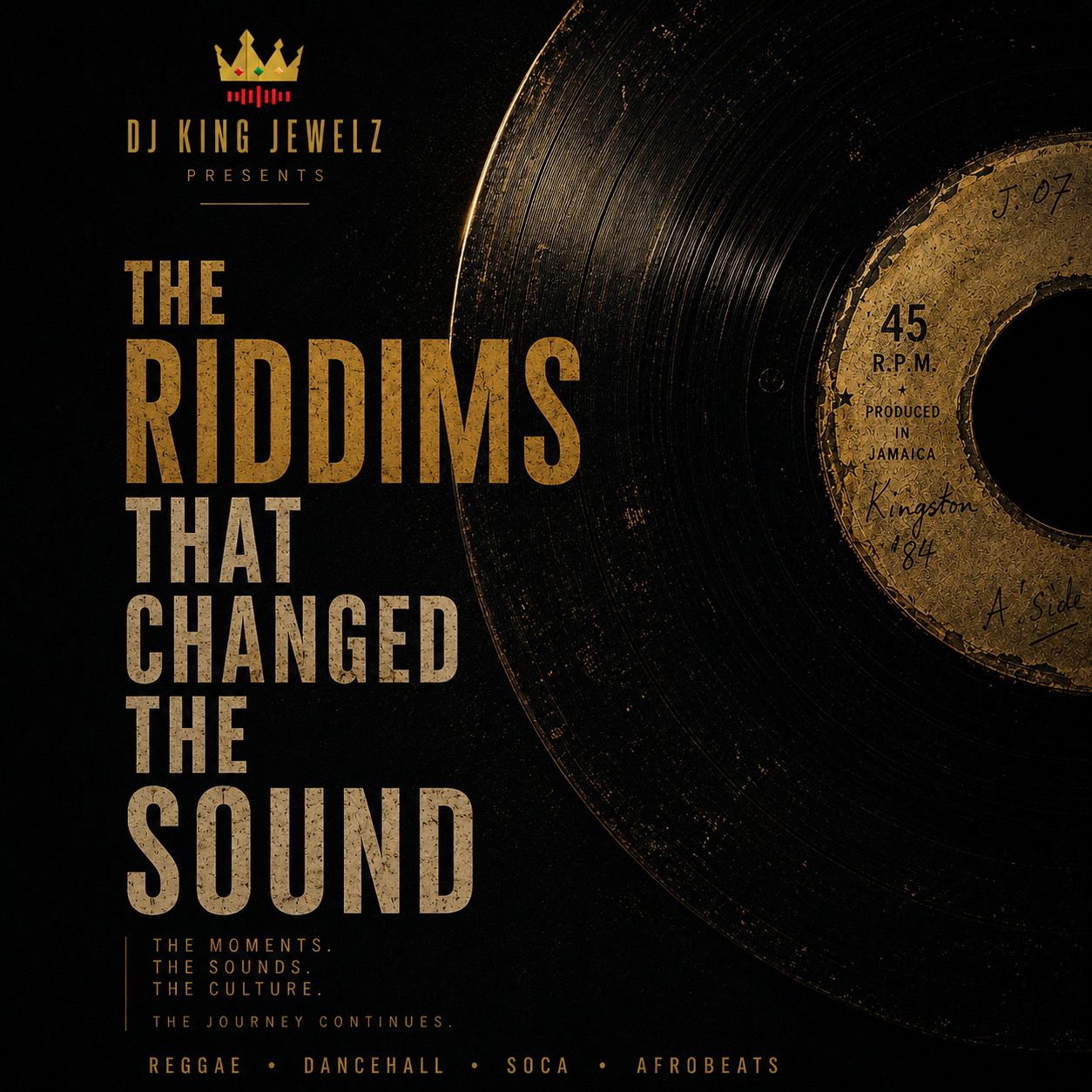
The Roots & Riddim Series
THE RIDDIMS THAT CHANGED THE SOUND
One rhythm. A thousand voices. Follow the thread from a Kingston studio to the whole moving world.
THE MOMENTS. THE SOUNDS. THE CULTURE.
THE JOURNEY CONTINUES.
WORDS BY JAY BERRY · DJ KING JEWELZ AFRO-CARIBBEAN ROOTS & RIDDIM FESTIVAL
When I think about roots and riddims, my mind doesn't go to the first song I heard. It goes to the first sound system I watched being strung up.
I couldn't have been more than nine years old.
Long before the dance began, a truck would pull into the community carrying what looked like an endless stack of speaker boxes, amplifiers, cables, and equipment. I could only ever really see the top half of it from where I stood, but even that was enough to fill my imagination. To me, the sound men weren't just setting up. They were craftsmen. Every cable had a place. Every box had a purpose. They moved with quiet confidence, building what everyone simply called "the rack."
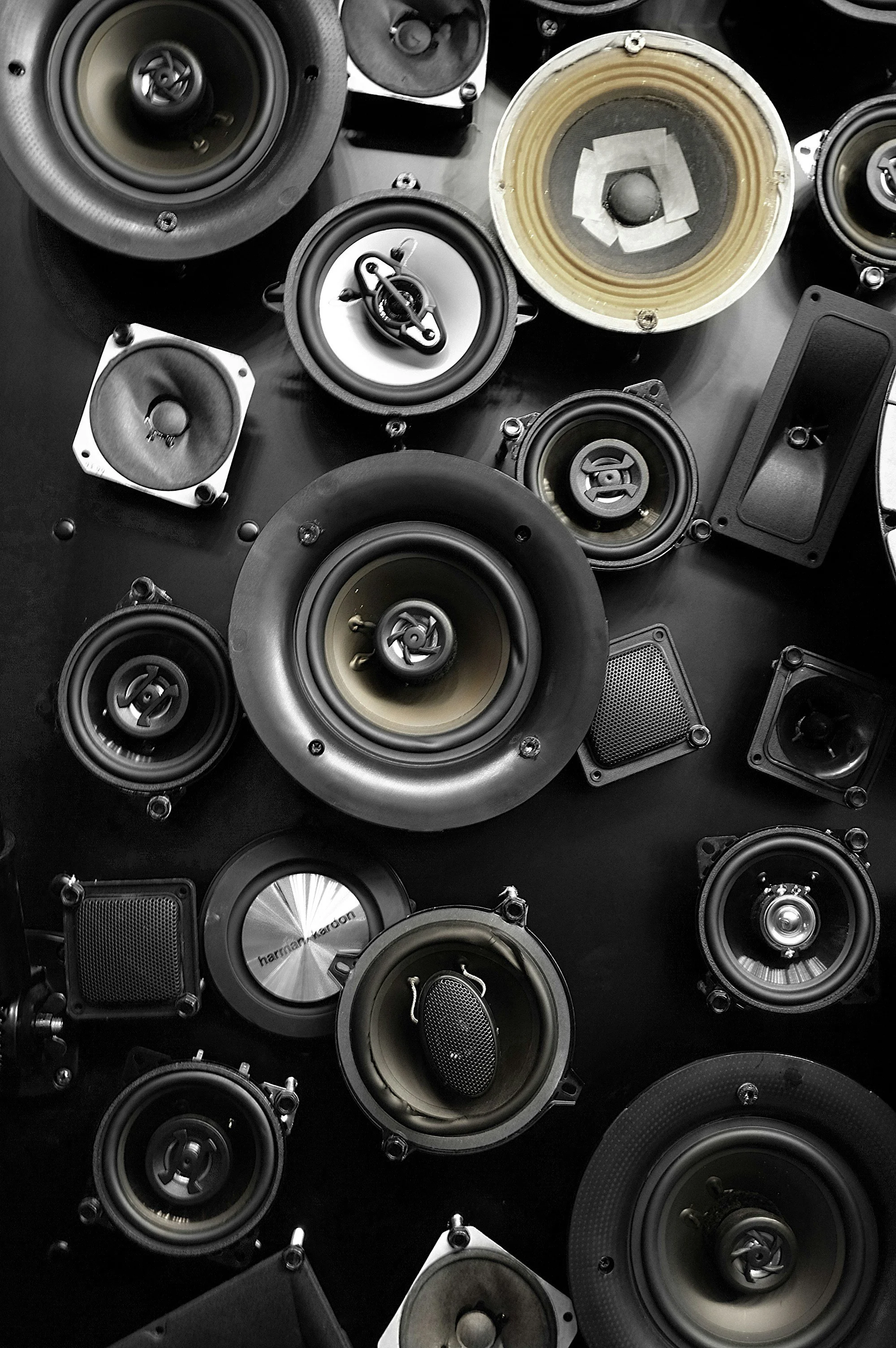
The rack goes up. Piece by piece, long before the first record plays.
The dance wouldn't start for hours, but that never mattered.
The sound had already arrived.
I remember standing there, watching every connection being made, completely fascinated. Then came the moment I waited for.
A crackle.
Silence.
Another crackle.
Then the tweeters came alive with that unmistakable hiss, almost like the sound system was taking its first breath. One by one, each speaker woke up until the whole neighbourhood knew exactly what was happening.
The sound was here.
For a lot of people, that alone was enough. People would start gathering. Conversations changed. Anticipation filled the air. Before a selector played the first record, before a DJ touched the microphone, before the first riddim rolled through the speakers, the sound system had already announced itself.
And then there was my mother. She travelled, and she never came home empty-handed, always with music, or stories from somewhere new. She's gone now, a year this year, but my ears are hers. She taught me to hear all of it as one sound. Looking back now, I realise I wasn't just watching speakers being wired. I was watching the foundation being built. Before the riddim, before the singer, before the dance.....the sound.
RIDDIM UPP!!
A riddim is more than a collection of drums, bass, and melody. It is a foundation. A meeting place. A living thing that grows each time a new voice steps onto it and leaves something behind for the next.
Every selector eventually asks the same question: where did this come from? Not the song. Not the artist. Not even the riddim. Something deeper than that. The feeling. The thing that makes a crowd move before they know why. The pulse hidden beneath the speakers. The thread connecting one generation to the next.
Follow that thread long enough and it begins to lead somewhere unexpected. A bassline reminds you of something older. A drum pattern carries an echo from another time. A sound that feels brand new reveals roots that run much deeper than you first imagined.
The thread twists and turns. It disappears beneath the surface and emerges somewhere else. It passes through roots reggae, stretches into dancehall, dances through carnival, and finds new voices across oceans and continents. Along the way it changes shape again and again, yet somehow remains connected to everything that came before.
Some riddims simply entertained. Others changed the direction of the music itself. They opened doors. Created movements. Defined eras. Shifted culture. Inspired the sounds that followed. This series follows those moments. The points where the thread pulled in a new direction. The sounds that refused to stand still.
The riddims that changed the sound.
Movement I
REGGAE
THE FOUNDATION · Where Roots and Riddim Are Born
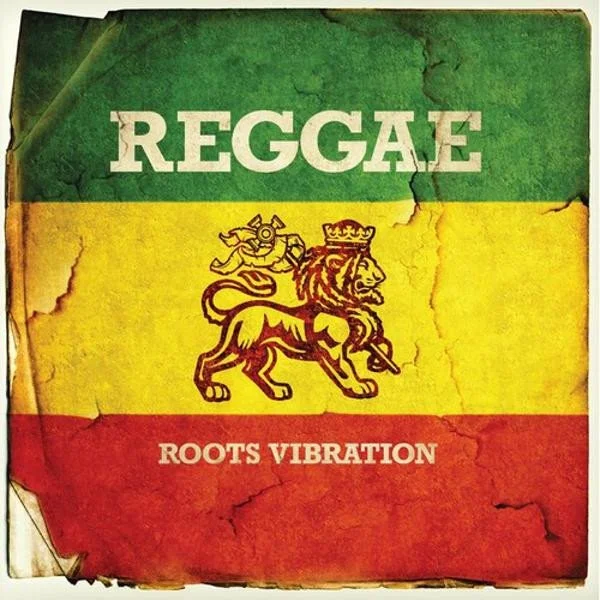
Roots & Culture
Every thread has to start somewhere. Before the dancehall, before the digital, before the world was watching, there was a slower pulse coming out of Kingston: the one-drop, the bassline that walks instead of runs, the drum that leaves space for the spirit to enter. This is the root the whole tree grows from.
1968 · The Foundation
Real Rock
Sound Dimension
Studio One
Coxsone Dodd
____________________________________________________________________
At Clement "Coxsone" Dodd's Studio One, the institution still called the Motown of Jamaica, the Sound Dimension band cut Real Rock in 1968. Dodd reportedly counted it his crowning achievement, and history agreed: the loping bassline and unhurried one-drop have been voiced, sampled, and rebuilt for more than half a century, from Willi Williams' "Armagideon Time" onward. It is the blueprint for the entire riddim idea: a rhythm strong enough to outlive every singer who ever rode it.
1970s · The Conscious Turn
Roots & Rastafari
Touchstone
Satta Massagana
The Abyssinians
By the turn of the seventies reggae turned inward. The tempo dropped, the bass deepened, and the lyrics began to carry Rastafari, repatriation, and the weight of the streets. The Abyssinians' "Satta Massagana," built on haunting minor chords and Amharic phrasing, became the movement's hymn, proof that a riddim could hold scripture as easily as a love song. Beyond the words, the sound itself changed: heavier, more meditative, more spiritual. This was the moment reggae decided what it was for.
Mid-1970s · The Studio Revolution
Dub
King Tubby
Lee "Scratch" Perry
Then the engineers stepped to the front. King Tubby and Lee "Scratch" Perry took finished records apart at the mixing board, dropping out the vocal, flooding the track in reverb and delay, letting bass and drum stand naked in the echo. Dub turned the studio itself into an instrument and the producer into an author. Listen to almost any remix culture that followed, whether hip-hop, jungle, dubstep, or modern pop, and you are hearing what they started in a Waterhouse control room.
1996 · Roots Reborn
Lalabella
Tony Rebel
Flames Records
By the mid-90s, with the dancehall gone hard and digital, a new generation pulled reggae back toward consciousness. Tony Rebel's Flames Records cut the Lalabella riddim in 1996, a modern-roots backdrop of warm brass over a dancehall bounce that carried Everton Blender's "Ghetto People Song," Ras Shiloh, and Mutabaruka. It was roots reborn for a new decade: the message music remembering it still belonged on a dancefloor.
2005 · Roots, Modernised
Drop Leaf
Don Corleon
Donovan Bennett
A decade later it happened again. In 2005, Donovan "Don Corleon" Bennett released Drop Leaf, a sweet, soulful one-drop that single-handedly sparked the modern roots revival and had everyone singing again, from Gentleman and Maxi Priest to Jah Cure and Morgan Heritage. When the digital sound had gone cold and aggressive, Drop Leaf reminded the genre that warmth still moved people. Roots, modernised. Proof the thread keeps looping back to where it began.
Movement II
Dancehall
The Digital Mutation · Reggae's Faster, Harder Child
Pull up!
Take that foundation, strip out the live band, and hand the rhythm to a machine. Dancehall is the sound of the dance itself, built for the selector, the deejay, and the crowd. Across two decades it didn't just produce hits; it rewrote how records get made, who gets to make them, and how the whole world counts a beat.
1985 · The Digital Revolution
Sleng Teng
King Jammy
Wayne Smith
On a night at King Jammy's studio in 1985, a Casio keyboard's factory preset got slowed down, bassed up, and turned into "Under Mi Sleng Teng" for Wayne Smith. It was the first fully digital dancehall riddim, and it ended the live-band era almost overnight, one keyboard now doing the work of a whole studio band.
For the session players who had filled those rooms for decades, it was the end of an era. For a generation with a keyboard and an idea, it was the beginning of everything. There is analog before Sleng Teng and digital after it; no riddim ever drew a sharper line.
1986 · The Digital Blueprint
Punanny
King Jammy
with Steely & Clevie
A year later, Jammy's house band, the era-defining duo Steely & Clevie, built the Punanny riddim, a raw, up-tempo digital shuffle first voiced by Admiral Bailey in 1986. Its bawdiness got it banned from radio (and rewritten as the cleaner "Healthy Body"), but the riddim never left: it has been versioned for nearly forty years and was voted the greatest dancehall riddim of all time in 2020. That longevity is the whole secret of the culture: a foundation strong enough that every generation finds new words for it.
1996 · The Melodic Shift
Joyride
Dave Kelly
Madhouse Records
By 1996 the digital sound had matured. Dave Kelly's Madhouse production Joyride traded harshness for a slick, rubbery, mid-tempo groove with room for melody: Wayne Wonder's silky title cut, Lady Saw's landmark "Sycamore Tree," Tanya Stephens' "Yuh Nuh Ready Fi Dis Yet." Kelly proved a riddim could be smooth and street at the same time, laying the template for the crossover sound that was about to conquer pop radio.
2001 · Built for the Dancers
Buy Out
Tony "CD" Kelly
Riddim Driven
Tony "CD" Kelly, Dave's brother, caught the next wave with 2001's Buy Out, a flagship of the "Riddim Driven" era when VP Records would press a whole album from a single rhythm. The cuts play like a dancefloor in motion: Sean Paul's "Like Glue," Beenie Man's "Miss L.A.P," T.O.K.'s "Money to Burn." This was the moment the music started being built for the dancers as much as the crowd. Tunes engineered for movement.
2002 · The Global Breakthrough
Diwali
Steven "Lenky" Marsden
Then came the breakthrough. Steven "Lenky" Marsden's 2002 Diwali riddim, that skipping, unmistakable hand-clap pattern, carried Sean Paul's "Get Busy," Wayne Wonder's "No Letting Go," and Lumidee's "Never Leave You" up the charts at the same time. For a moment the riddim itself was the pop star, and the whole world started borrowing the sound. Dancehall had crossed over, and learned it could sit at the centre of global pop without changing who it was.
2005–06 · The Gully Era
Red Bull & Guinness
Di Genius& Delly Ranx
By 2005–06 the mood darkened. A teenage prodigy named Stephen "Di Genius" McGregor, son of reggae great Freddie McGregor, co-built the Red Bull & Guinness riddim with Delly Ranx, and an unknown named Mavado rode it into history with "Weh Dem a Do." Grittier, colder, almost cinematic, it became the soundtrack to the Gully era and the Gully-Gaza rivalry that gripped Jamaica. A new generation had taken the controls, and dancehall got harder, sharper, and more dangerous.
The sound was never owned by one island. It's a conversation.
— Roots & Riddim
Movement III
Soca
The Carnival Engine · The Same Logic, A Different Fuel
Built For The Road.
Follow the thread south, out of Jamaica and across the water to Trinidad, and the same one-rhythm idea becomes Carnival. Soca runs hotter. It is faster, brighter, built for a moving crowd of thousands on the road, but the principle holds: one riddim, many voices, a whole season of music made to move bodies. This is where the thread learns to fly.
Early 1970s · The Origin
The Birth of Soca
Lord Shorty
Trinidad
In the early 1970s, Garfield "Lord Shorty" Blackman heard calypso losing ground and went looking for a new pulse. He fused calypso with the Indian rhythms of Trinidad's East Indian community, the dholak and the dhantal, and called the hybrid "Sokah," soon spelled soca: the soul of calypso. Where calypso lived on wit and storytelling, soca was built on the body. That origin, African and Indian Trinidad meeting in one groove, still beats underneath everything the genre does.
The Engine Room
Power Soca
Super Blue
Machel Montano
Then came the velocity. Power soca pushed the tempo into overdrive: the jump-and-wave, the breathless call-and-response of the fete. Pioneered by the likes of Super Blue and carried to its peak by Machel Montano, it's less a song than a command: a high-octane sound engineered to pull a crowd off its feet and keep it there until the road runs out. Power soca is Carnival distilled to pure energy.
Crossing the Water
International Soca
Touchstone
Arrow · “Hot Hot Hot”
Soca first reached beyond the Caribbean on the strength of one irresistible hook. Arrow's "Hot Hot Hot" (1982) became a global standard, covered and sampled the world over, and proved Carnival music could travel anywhere. From there the road widened: diaspora Carnivals in London, Toronto, New York, and Miami turned soca into an international circuit, teaching the music to speak to the whole world without losing the island.
The Melodic Turn
Groovy Soca
The slower lane
Not everything had to sprint. Groovy soca eased the tempo and leaned into melody and song, making room for romance, sweetness, and the stories the power tunes ran straight past. When Carnival's monarch competitions split into Groovy and Power, it formalised what listeners already felt: soca could be a feeling as much as a frenzy, and that range is exactly what let it reach a wider audience.
The Homecoming
Afro-Soca
Trinidad & the Continent
Now the thread loops back across the Atlantic. Afro-soca fuses Trinidad with the African continent, with Machel Montano and a new generation linking up with Afrobeats artists, log drums and soca horns meeting in the same track. It plays like a homecoming as much as a fusion: the African root that birthed both Carnival and the continent's pop now flowing in both directions at once. Where it travels next may be the most exciting question in the music.
Movement IV
Afrobeats
New Voices Across Oceans · The Conversation Goes Global
Original Rhythm
Follow the thread far enough and it crosses an ocean. In Lagos, Accra, and London, the same instincts surface in a sound that now sits at the centre of global pop: the riddim, the dance, the bounce that makes a crowd move before they know why. This is where the family finally hears itself echoed back from the other side of the water.
2011 . The Ignition
Azonto
Ghana
Sarkodie · Fuse ODG
Around 2011, Ghana gave the world Azonto, a sound, a dance, and an attitude all at once. Driven by producers like Killbeatz and exploding through Sarkodie and Fuse ODG's "Azonto," it travelled on a movement you could learn and share, igniting Afrobeats' first real breakout from West Africa to the UK and beyond. Azonto proved the dance could carry the music across borders, a lesson the genre never forgot.
2012–13 · The Dance-Craze Era
Kukere & Skelewu
Iyanya · Davido
It became a strategy. Iyanya's "Kukere" and Davido's "Skelewu" turned the dance routine into the engine of distribution. Long before TikTok, fans were learning steps, filming themselves, and pushing songs across the continent and the diaspora. For DJs and artists, the dance was the marketing, the hook, and the community all at once. Afrobeats learned to travel on the body as much as the airwaves.
2016 · The Pon Pon Era
Pon Pon
Mr Eazi · Runtown
Banku & soft synths
Then the bounce went soft. The Pon Pon sound, mellow and mid-tempo, built on soft synth stabs in pairs and Ghana's highlife sweetness, cooled Nigerian pop down and made it irresistibly hummable. Mr Eazi's "Banku" style, Runtown's "Mad Over You," and Davido's "If" and "Fall" defined a couple of years of dominance and quietly widened who Afrobeats could reach. It unlocked the genre's pop instinct, proof you could conquer by relaxing.
The Afro-Fusion Era
Burna, Wizkid & Tems
Afro-fusion
The global takeover
Then the giants arrived. Burna Boy, Wizkid, and Tems pushed Afrobeats into open fusion, blending it with dancehall, R&B, hip-hop, and pop until the borders dissolved. Wizkid's turn on Drake's "One Dance" and his global smash "Essence" with Tems didn't just chart; they relocated Afrobeats to the centre of Western pop. Afro-fusion is the sound of a genre confident enough to absorb everything and still sound like home.
The Afropiano Era
Afropiano
Amapiano x Afrobeats
log drums
And the thread keeps moving. Amapiano, South Africa's deep, log-drum-driven groove, flowed up into Afrobeats and shifted its centre of gravity, the airy synths and rolling bass giving the dancefloor a new patience. A new wave of artists built a whole modern sound on the fusion. It's the latest turn in a very old story: a regional rhythm crossing a border and remaking the music it lands in, exactly what Sleng Teng, "Hot Hot Hot," and Diwali did before it.
So follow the thread back through everything you've just heard. A Studio One bassline in 1968. A Casio preset in 1985. A Trinidadian fusing two cultures into one groove. A teenager in Lagos turning a dance into a movement. Different islands, different decades, different oceans, and the same impulse running underneath all of it: take a rhythm, hand it to the next voice, and let them leave something behind for the one after.
That's what roots and riddim have always been: not a museum, but a living thing, still growing every time someone steps onto the foundation and adds their piece. The sound was never owned by one island or one genre. It is a conversation, and right now it is louder and more global than it has ever been.
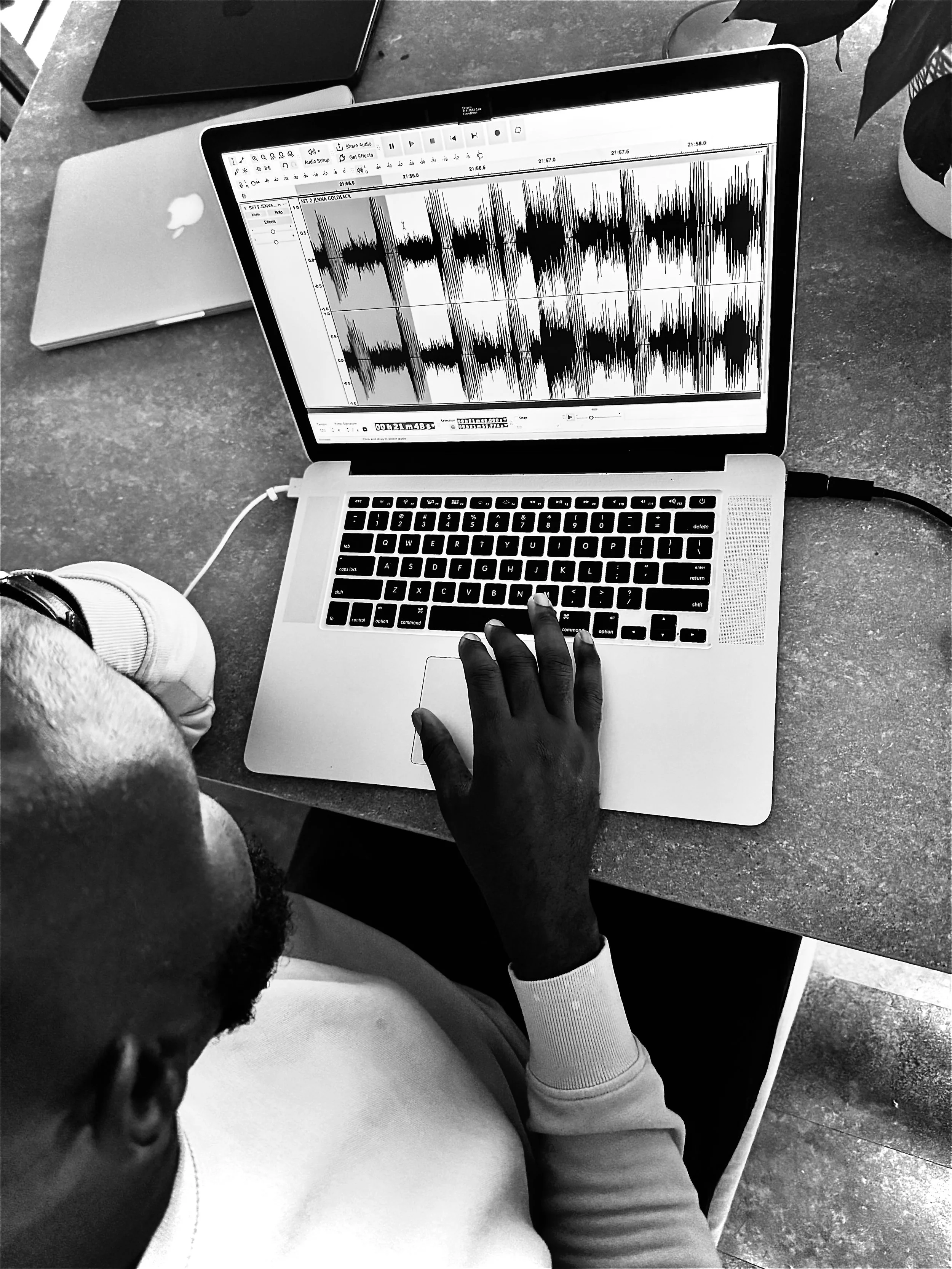
The next one. Always taking shape, somewhere a RIDDIM is being built right.
The thread is still moving. The dance hasn't stopped. And the next riddim that changes the sound is already being built in a studio somewhere, waiting for the needle to drop.
Somewhere, a sound system is being strung up right now. The first crackle is coming.
The Sound is here
Reggae • Dancehall • Soca • Afrobeats
The journey continues.
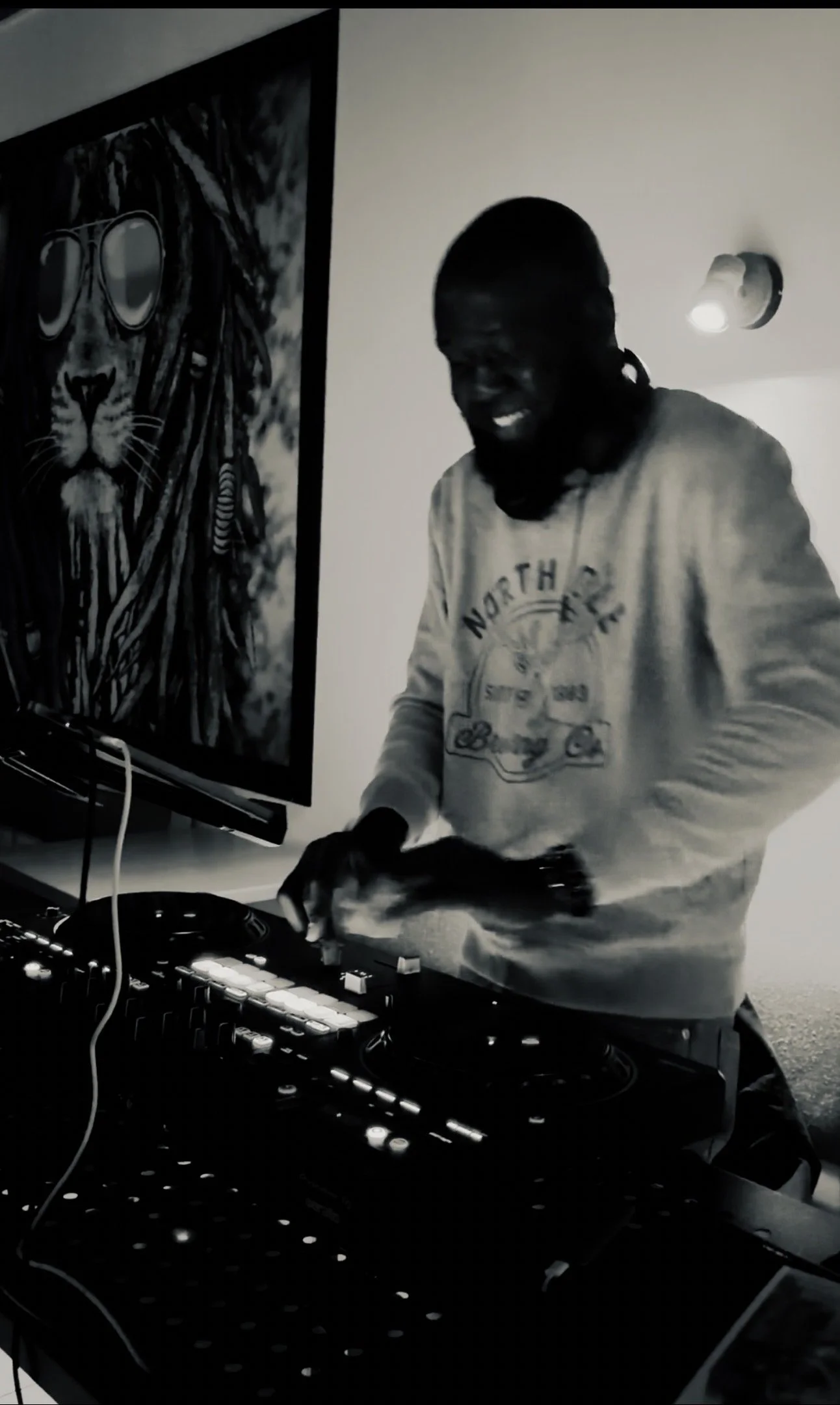
Pure Joy.
Jay Berry·DJ KingJewelz
Afro-Caribbean Roots & Riddim Festival· DJKingJewelz.com
